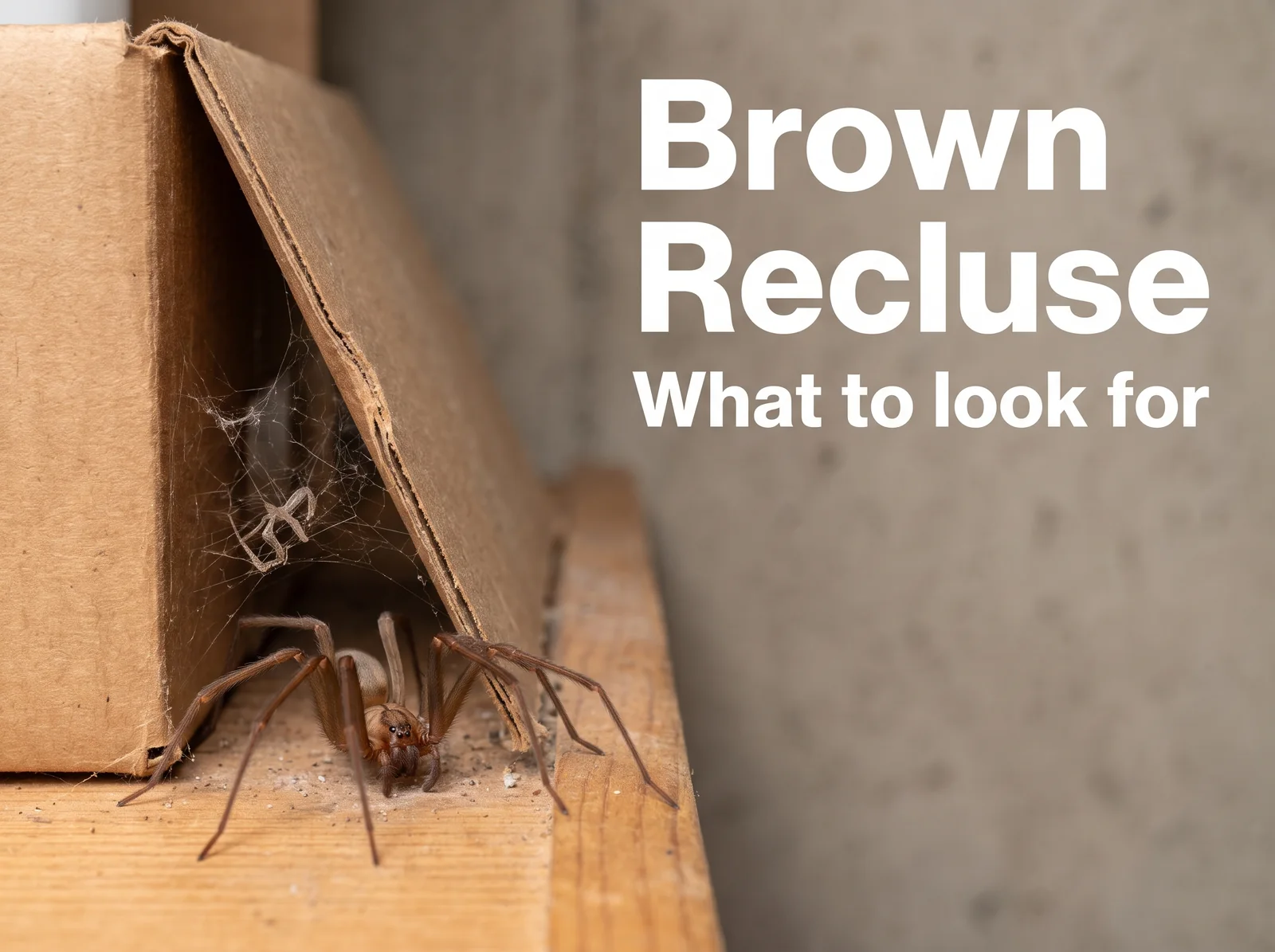
What's the first step to get rid of brown recluse spiders today?
Stay calm and don't reach for a spray can right away. If you see the spider, try to capture it in a clear container using a piece of paper or cardboard as a slider. Put the container in the freezer for a few minutes so you have a still specimen to look at closely or photograph.
This guide walks you through how to get rid of brown recluse spiders in a way that's practical and doesn't skip steps. The goal on day one is information, not action against every spider you see.
Write down exactly where you found it: which room, which shelf, near which box or piece of furniture. That location often points straight to where more might be hiding.
Avoid handling boxes, stored clothing, or firewood barehanded in that area until you've had a chance to look more closely. Gloves and a flashlight are enough for now.
- Capture the spider if you can, without touching it directly
- Note the exact room and spot where you found it
- Wear gloves before moving nearby boxes or clutter
- Check family members and pets for any unexplained bites or welts
How do you confirm it's actually a brown recluse?
Before you get rid of brown recluse spiders, you need to be sure that's what you're dealing with. Many brown, unremarkable-looking spiders get mistaken for recluses, including wolf spiders and common house spiders.
Look for six eyes arranged in three pairs, a solid tan to dark brown body with no stripes, and legs that are plain without spines or bands. The violin-shaped marking people talk about is often faint or missing, so don't rely on it alone.
Size and color alone aren't reliable either. A spider that's the right size but has eight eyes or patterned legs is very likely something else entirely.
If you're not confident after a close look, a photo comparison against verified reference images is worth the few minutes it takes. Getting the ID right changes how much effort and worry the rest of this plan deserves.
Where should you inspect to find the source?
Finding the source matters as much as any product when you want to get rid of brown recluse spiders for good. These spiders don't build obvious webs out in the open, so inspection means looking in the quiet, undisturbed corners of your home.
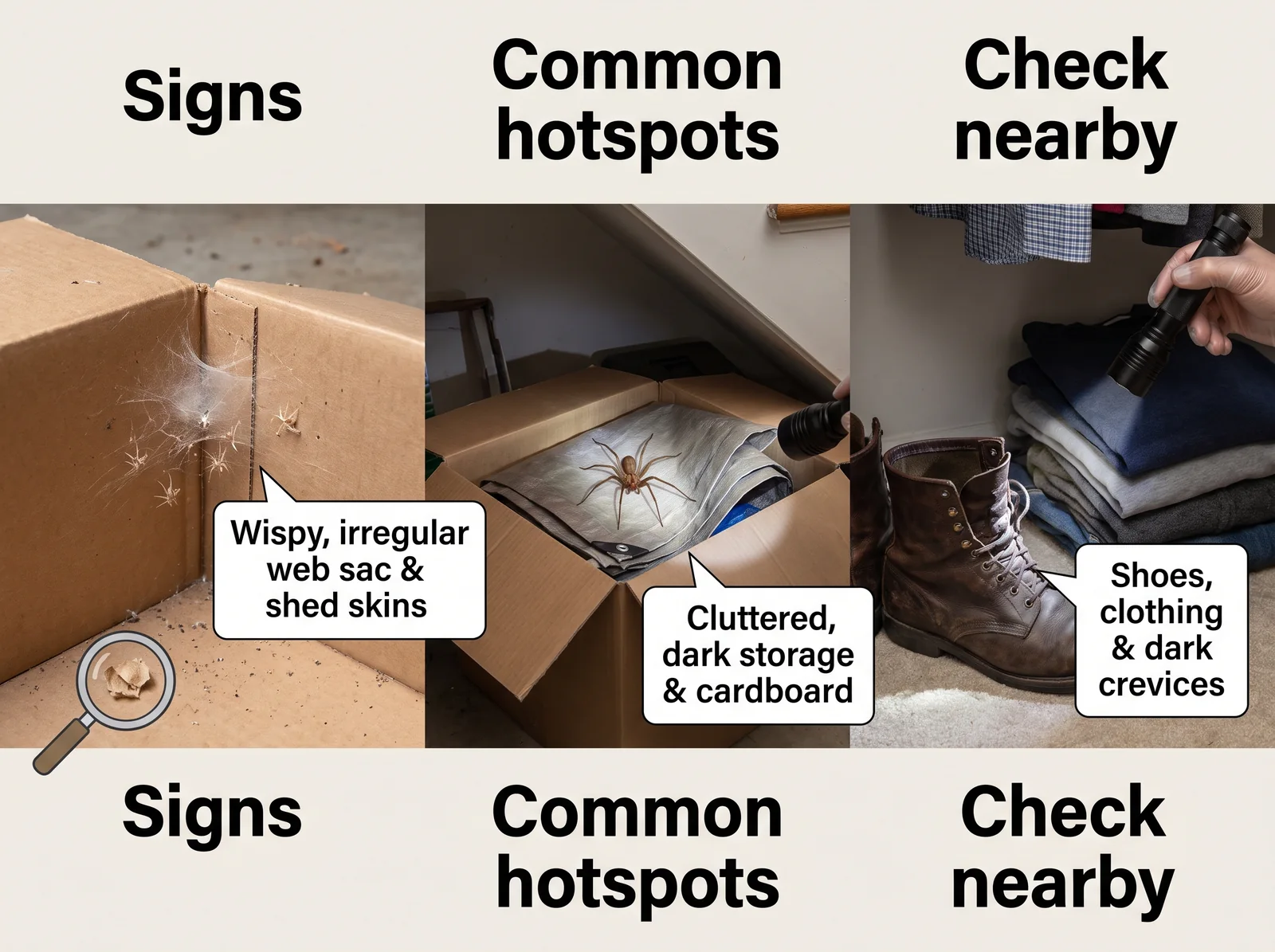
Start in basements, attics, garages, closets, and storage rooms. Check inside cardboard boxes, behind stacked items, under furniture that rarely gets moved, and along baseboards in low-traffic rooms.
Outside, check gaps around the foundation, weep holes in brick, spaces around utility lines, and areas under stored firewood or debris close to the house. These are common entry points.
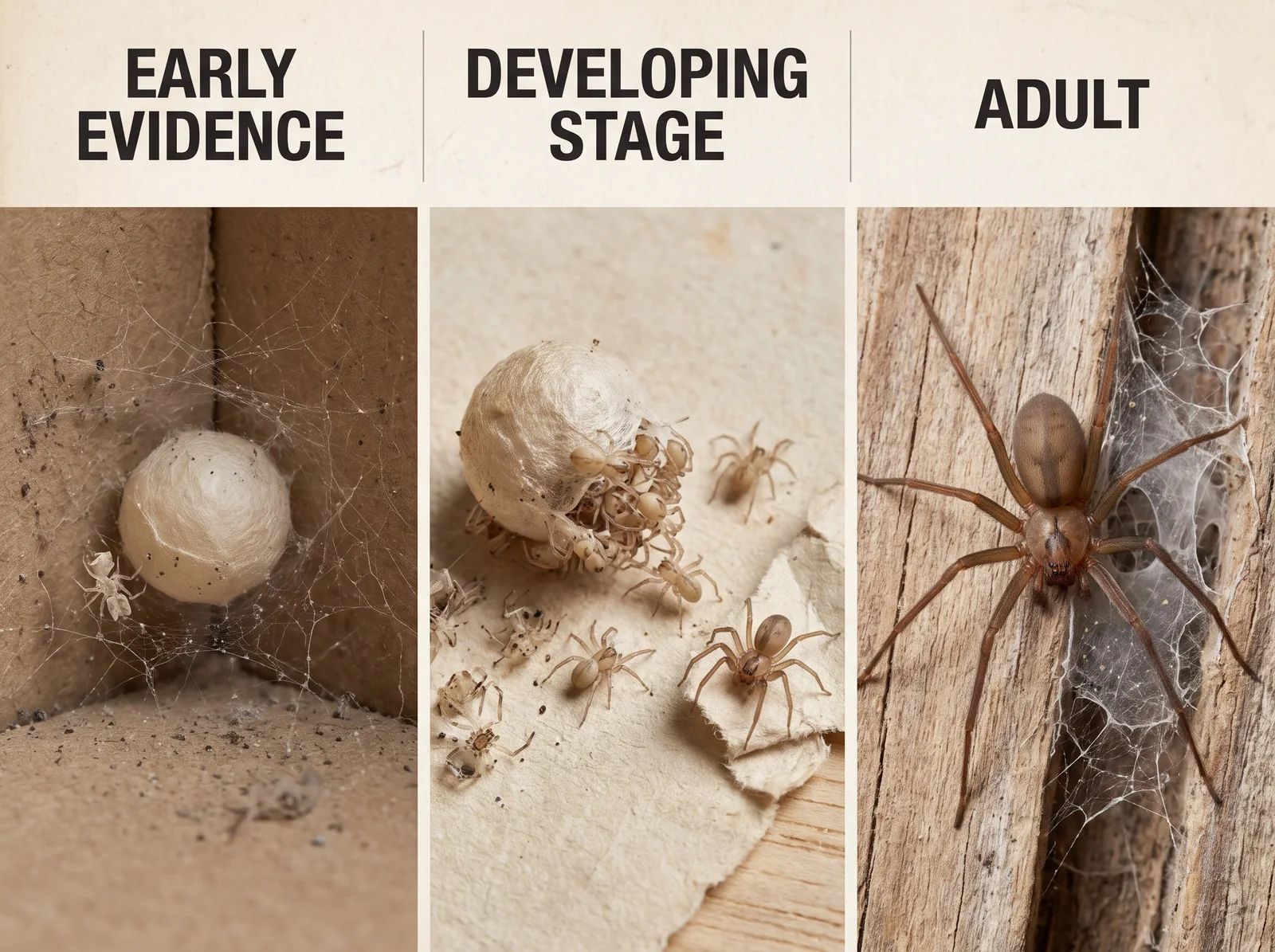
Look for physical signs beyond the spider itself: shed skins, small off-white egg sacs, and loose, irregular webbing tucked into corners or crevices.
- Cardboard boxes and stored clothing in closets and attics
- Basement corners, shelving units, and behind furniture
- Gaps around the foundation, doors, and utility penetrations
- Firewood piles, debris, or clutter stacked against exterior walls
What are the best ways to get rid of brown recluse spiders?
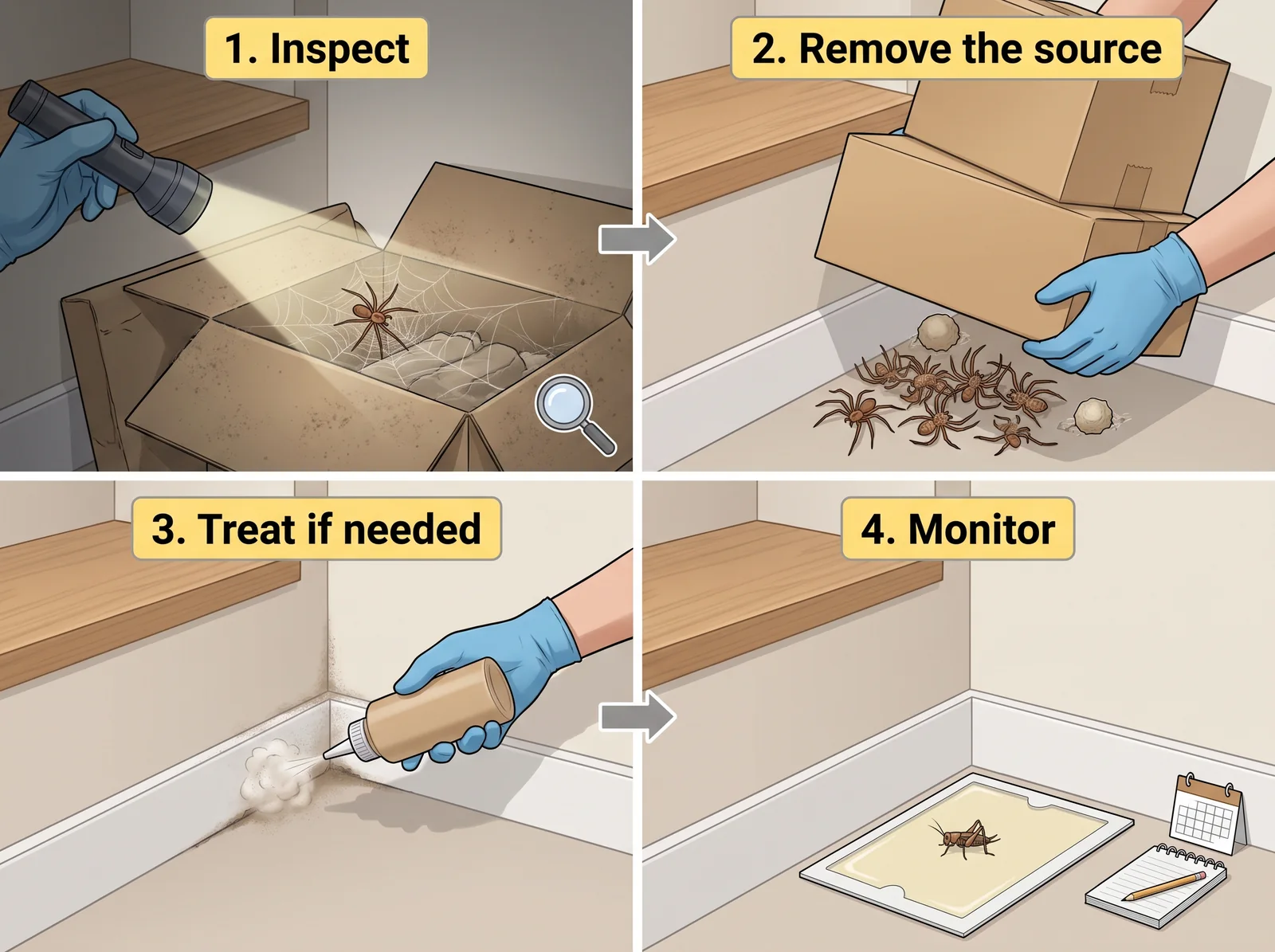
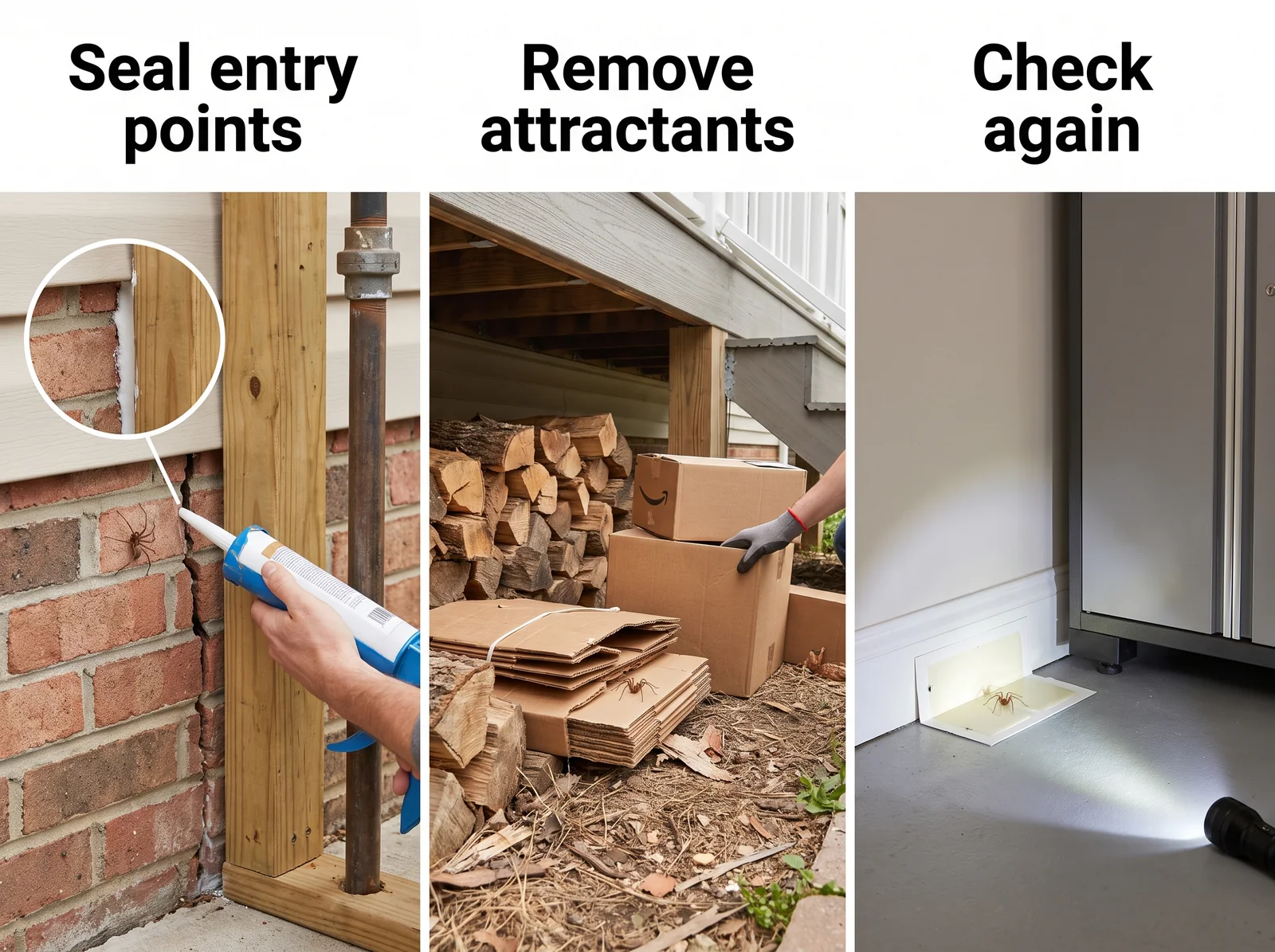
If you're wondering how to get rid of brown recluse spiders quickly, start with removal and exclusion, not pesticides. These are the most effective, lower-risk methods to get rid of brown recluse spiders without reaching for chemicals first.
Declutter storage areas and swap cardboard boxes for sealed plastic bins. Cardboard gives spiders exactly the dark, undisturbed cover they look for, while sealed bins remove that shelter.
Place sticky glue traps flat against baseboards in closets, basements, and garages. These traps catch wandering spiders and also tell you where activity is highest, which helps you focus cleanup efforts.
Vacuum up any spiders, webs, and egg sacs you find directly, then seal and dispose of the vacuum bag or empty the canister outside right away. If a pesticide ever feels necessary for a heavy infestation, use only an EPA-registered product labeled for spiders and for the specific site you're treating, and follow the entire label exactly as written.
How do you monitor after treatment?
Monitoring tells you whether your plan to get rid of brown recluse spiders is actually working. Keep sticky traps in place in the areas where you found activity and check them weekly.
Track what you catch over several weeks. A steady drop in captures is a good sign that source removal and sealing are working. Steady or rising numbers mean there's still an active hiding spot you haven't found yet.
Re-inspect the same areas after any decluttering or sealing work, since disturbing a space often pushes remaining spiders to move and show themselves on traps or during a flashlight check.
How can you prevent brown recluse spiders from returning?
Prevention is mostly about removing the conditions these spiders rely on. Seal cracks and gaps around the foundation, windows, and doors, and install door sweeps where light shows through the bottom of a door.
Keep storage areas low-clutter and use sealed plastic bins instead of cardboard boxes, especially in basements, attics, and garages. Rotate stored items occasionally so nothing sits completely undisturbed for months at a time.
Outside, move firewood and debris piles away from the foundation, trim back vegetation touching the exterior walls, and keep gutters clear so moisture doesn't build up near entry points.
- Seal foundation cracks and gaps around utility lines
- Install or repair door sweeps and weatherstripping
- Switch cardboard storage boxes for sealed plastic bins
- Keep firewood and debris away from exterior walls
Are brown recluse spiders dangerous to children and pets?
Bites are uncommon and almost always happen by accident, usually when a hand or foot disturbs a spider hiding in clothing, shoes, bedding, or stored boxes.
Teach kids to shake out shoes and clothes that have been stored in garages, attics, or basements before putting them on. This one habit prevents most accidental contact.
Keep pet bedding off the floor when possible and check under it occasionally, especially if it's kept in a garage, basement, or storage room.
If a bite happens and the area develops swelling, a dark center, or doesn't improve, contact a doctor or veterinarian. Save the spider if you can, since a confirmed ID helps with treatment decisions.
When should you call a professional to get rid of brown recluse spiders?
Most single-spider sightings and light activity can be handled with the inspection and removal steps above. Professional help makes more sense when trap counts stay high after weeks of effort, or when you find multiple egg sacs and shed skins in one area.
A licensed pest professional knows how to get rid of brown recluse spiders in wall voids, attic insulation, and other spaces you can't safely inspect or reach on your own.
It's also worth calling a professional if anyone in the household has a health condition that makes even a rare bite risky, or if you're simply not confident in your identification and want it confirmed before doing anything else.
Questions you may still have
How do I get rid of brown recluse spiders without chemicals?
Focus on removal and exclusion first. Declutter storage areas, switch cardboard boxes for sealed plastic bins, seal cracks and gaps around the foundation and doors, and place sticky traps in low-traffic areas to catch and monitor activity. Most of the work in learning how to get rid of brown recluse spiders comes down to eliminating hiding spots rather than using any spray or chemical treatment.
What attracts brown recluse spiders indoors?
They're drawn to dark, quiet, undisturbed spaces rather than food or light. Cardboard boxes, stacked clutter, basements, attics, and garages give them the cover they prefer. Reducing clutter and keeping items in sealed bins removes much of what makes an area attractive to them in the first place.
How long does it take to get rid of brown recluse spiders?
It depends on how established the population is. Light activity often improves within a few weeks of decluttering, sealing entry points, and trapping. Heavier infestations with multiple egg sacs can take longer and may need a professional to fully resolve, especially if spiders are established inside wall voids or insulation.
Do brown recluse spiders bite without provocation?
No. They're not aggressive and don't chase or attack. Bites almost always happen when a spider is trapped against skin, usually inside a shoe, glove, or piece of clothing that's been sitting undisturbed. Shaking out stored items before wearing them prevents most accidental contact.
Are brown recluse spiders common everywhere in the US?
No. They're mainly found in the central and southern United States. Spiders reported as brown recluses in other regions are frequently misidentified look-alikes. Confirming the species with a close look at the eyes and body markings is worth doing before assuming that's what you have.